
When we think about the forces that shape our lives, we tend to focus on the visible ones: people, events, choices, and circumstances. We can point to them, describe them, and often trace their effects.
But some of the most powerful forces are invisible.
Gravity is invisible. So is magnetism. We cannot see radio waves, yet they carry information across continents. We cannot see the electrical impulses moving through our nervous system, yet they allow us to think, move, and feel.
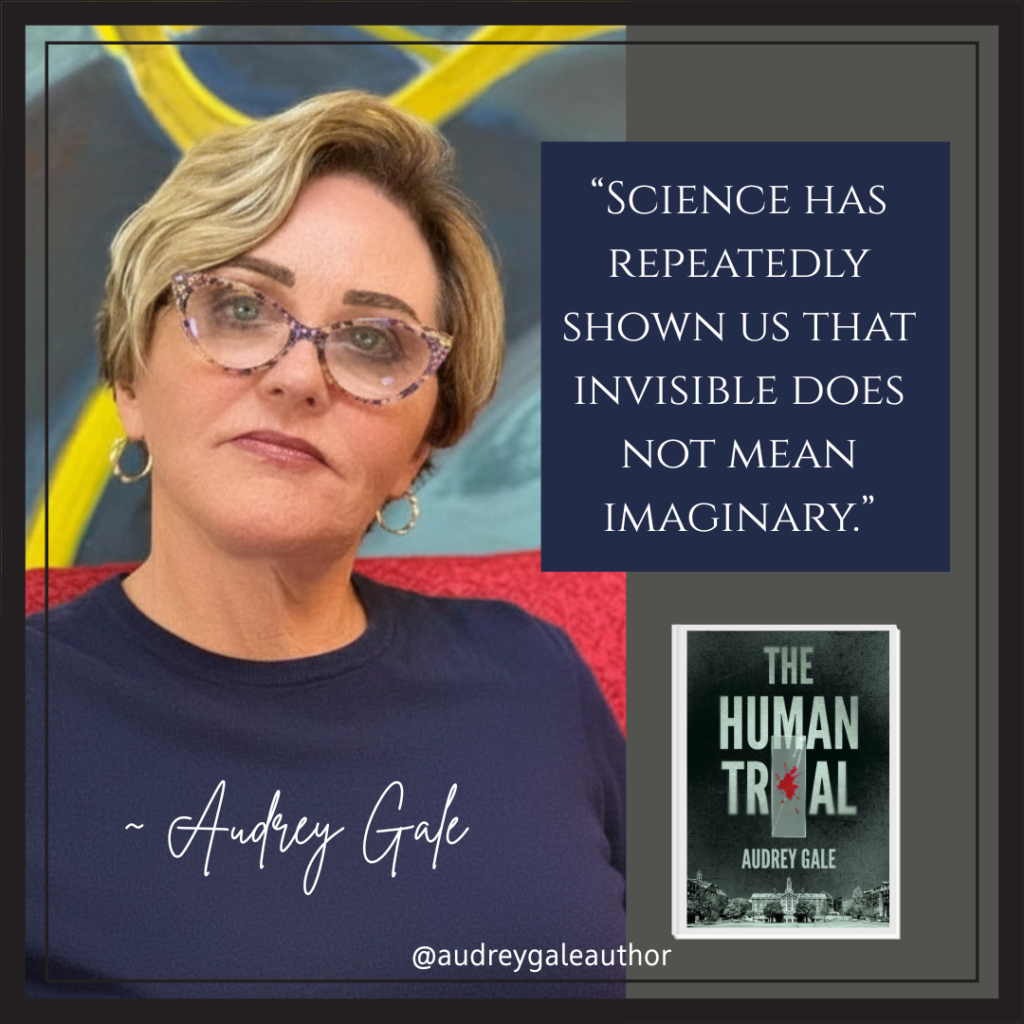
Science has long taught us that absence of visibility is not absence of existence.
This realization became increasingly important to me as I explored the research behind The Human Trial. While writing the novel, I found myself drawn to the work of physicists who challenged us to think beyond what can be measured with our five senses alone. Men like Einstein and Bohr understood that reality is often far stranger—and far more interconnected—than it first appears.
At the same time, I was reflecting on personal experiences that traditional explanations could not fully account for. Experiences involving healing. Recovery. Unexpected outcomes. Moments when the body seemed to respond to influences that were difficult to quantify but impossible to ignore.
This is not an argument against science. Quite the opposite.
Science advances when we remain curious enough to investigate what we do not yet understand.
History is filled with discoveries that were once dismissed because the mechanisms behind them had not yet been identified. Germs were invisible before microscopes. Electromagnetic fields were invisible before instruments could detect them.
What invisible forces are we studying today that future generations will simply accept as fact?
As both a writer and researcher, I find that question endlessly fascinating.
Perhaps the greatest lesson is one of humility. There is still so much we do not know.
And sometimes the most interesting stories begin precisely where certainty ends.